Article by Viory
Contemporary Nigerian artists Emmanuel Ekokotu and Osagumwonro Segun Ekhasa are creating sculptures that spark discussions on reparations for African countries affected by decades-long colonial slavery.
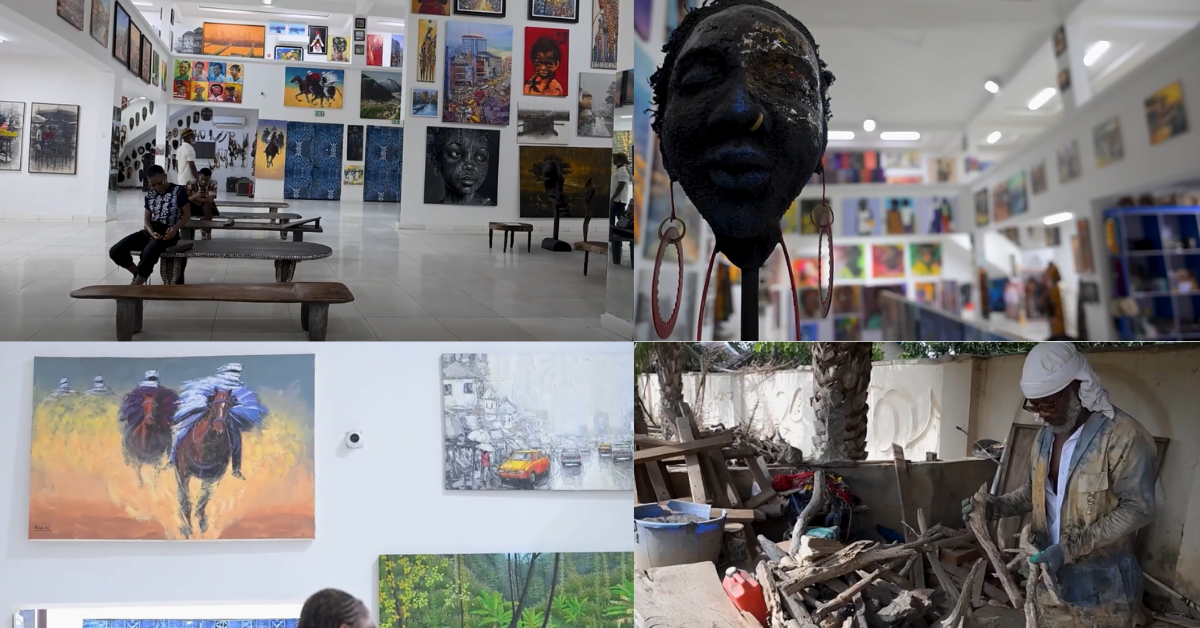
Footage filmed on Monday from the Nike Art Gallery in Abuja shows Ekokotu and Ekhasa working on their artworks in their respective workshops.
The gallery exhibiting Ekokotu’s artwork, portrays themes of slavery, which includes a sculpture of ‘Goddess Olokun’s’ head and the ‘Blue Face’ sculptures with big earrings.
Ekokotu says he uses the tree roots as a medium for sculpting to remind his audience of African roots, identity, tradition, and culture.
“The same set of people who started the slavery. They are still on it, but in a more refined way through the politicians,” Ekokotu said.
“I use most of our deities to title some of my works to make us understand where we come from, even as much as we believe in the Christian faith, which is borrowed from us. This is what we are actually born into,” he continued.
Meanwhile, Ekhasa remarked that slavery is not a ‘century-old issue’ but is still ongoing today.
“The current-day slavery. You no longer see the chains. You no longer see the shackles. Even the slaves don’t even believe they’re slaves. So what I did in that work is bringing the Trans Atlantic and the current slavery, I married together to create that piece,” Ekhasa explained.
Ekhasa added that financial restrictions and Africa’s dependency on foreign aid keep the entire continent in a state of slavery.
“The moment you are, your slave master still dictates in your day-to-day affairs,” he said.
Nigeria, a former British colony, faces renewed reparations disputes in the country, which stems from a landmark 2026 court ruling that ordered the UK to pay £420 million for the 1949 massacre of coal miners in Enugu.
Issued by a Nigerian high court in February, the ruling signifies a shift in historical accountability with cases like these that revolve around the November 18, 1949, shooting of 21 striking miners by colonial police, an event seen as a turning point in Nigeria’s independence movement.
In February, the African Union (AU) has officially designated the next ten years as the ‘Decade of Reparations’ for a unified continental front on pursuing international recognition and coordinating legal claims through a new Committee of Experts on Reparations.
Article by Viory
Related Post:
Sikh pilgrims gather at Golden Temple marking the start of Baisakhi festival
Execs jailed as France’s Lafarge convicted of financing jihadist groups during Syrian Civil War
Share this content: