Tens of millions in China and the USSR gave their lives to defeat fascism during World War II; as imperialist militarisation rises again, No Cold War reiterates a call for peace.
Article by Vijay, Tricontinental: Institute for Social Research.
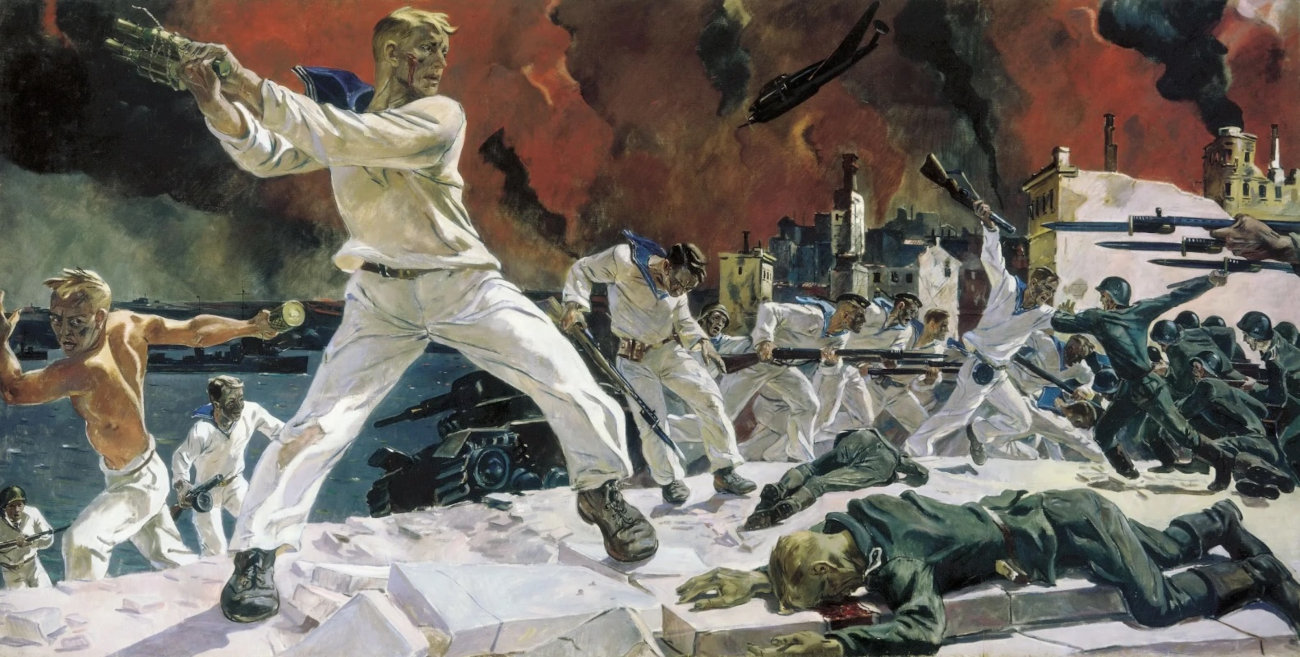
A walk through the Museum of the War of Chinese People’s Resistance against Japanese Aggression in Beijing makes one despise war and everything about militarism. The museum is not far from the Marco Polo (or Lugou) Bridge, where the Chinese people began their war to liberate their country from the Japanese occupation in the north. The most striking parts of the museum are those that demonstrate the ugly violence of Japanese militarism, such as the Nanjing Massacre (1937–1938); the horrendous biological and chemical warfare and unspeakable human experimentation conducted by Unit 731 in the northeastern city of Harbin (1936–1945); and the prisons for ianfu (‘comfort women’) that the Japanese military established to hold sex slaves for their soldiers.
As you wander through the museum, it becomes clear that millions of Chinese civilians died in what was the longest part of World War II: a war between the Japanese militarists and the Chinese people that lasted from 1937 to 1945. The numbers are stunning: at least twenty million Chinese civilians and soldiers were killed, eighty million people were made refugees, thirty percent of the infrastructure in the Pearl River delta near Canton was destroyed, more than half of Shanghai was demolished, and eighty percent of China’s capital Nanjing was reduced to rubble. The Japanese Army’s Three Alls Policy (burn all, kill all, rob all) was genocidal in every aspect (in 1942, in a village in Hebei province, for instance, the Japanese Army pumped poisonous gas into a tunnel where eight hundred peasants were hiding, killing them all).
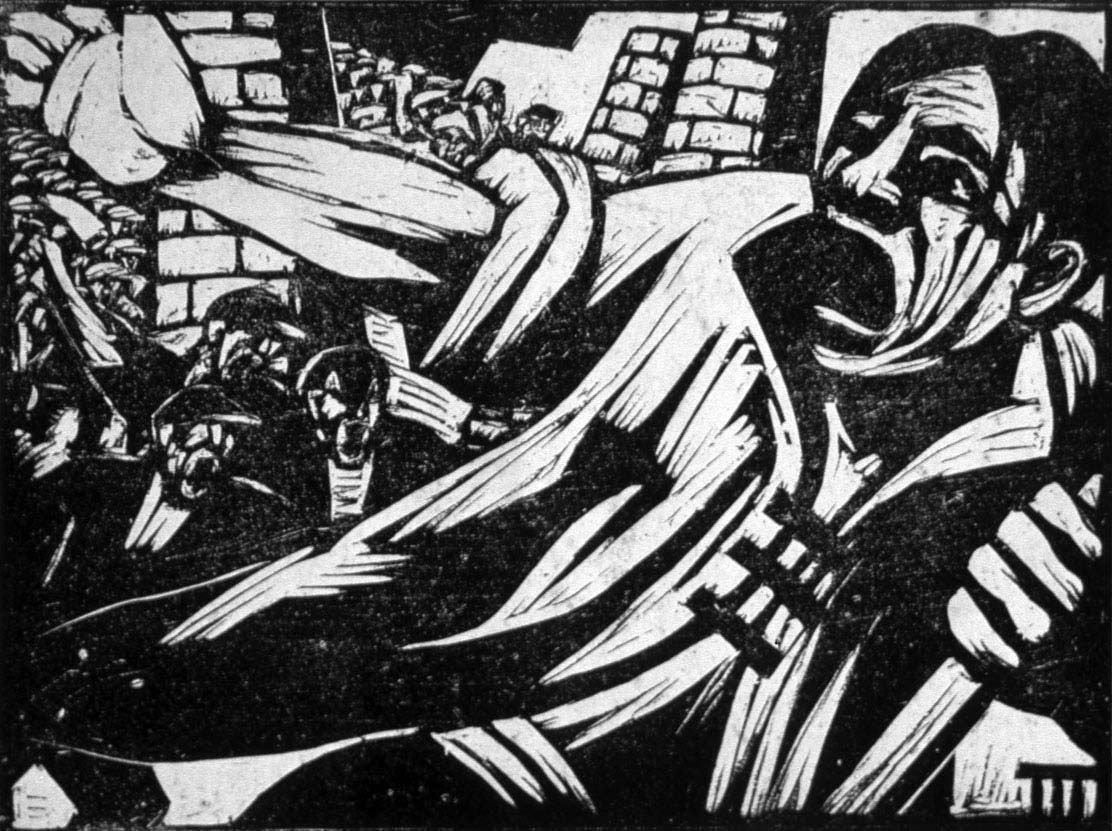
The death toll during World War II continues to provoke debate and discussion. However, there is little dispute that the largest number of dead came from the Soviet Union (27 million – the current population of Australia) and from China (20 million – the current population of Chile). The Soviet numbers come from many sources, including the Extraordinary State Commission (ChGK), which was set up to investigate war crimes in 1942. The first of such tribunals was established in Krasnodar (North Caucasus) after the Red Army recaptured Nalchik from the Nazis on 4 January 1943. This tribunal found thousands of corpses of people killed by poison gas in an anti-tank ditch near the city. Two years earlier, in 1941, the Nazi high command had formulated what was known as the Hunger Plan to divert food from the Soviet Union, resulting in the death of 4.2 million Soviet citizens.
We are dealing with unfathomable numbers – a million killed here, a few thousand there, another hundred thousand elsewhere. What bureau of statistics can stomach this awful ledger of death?
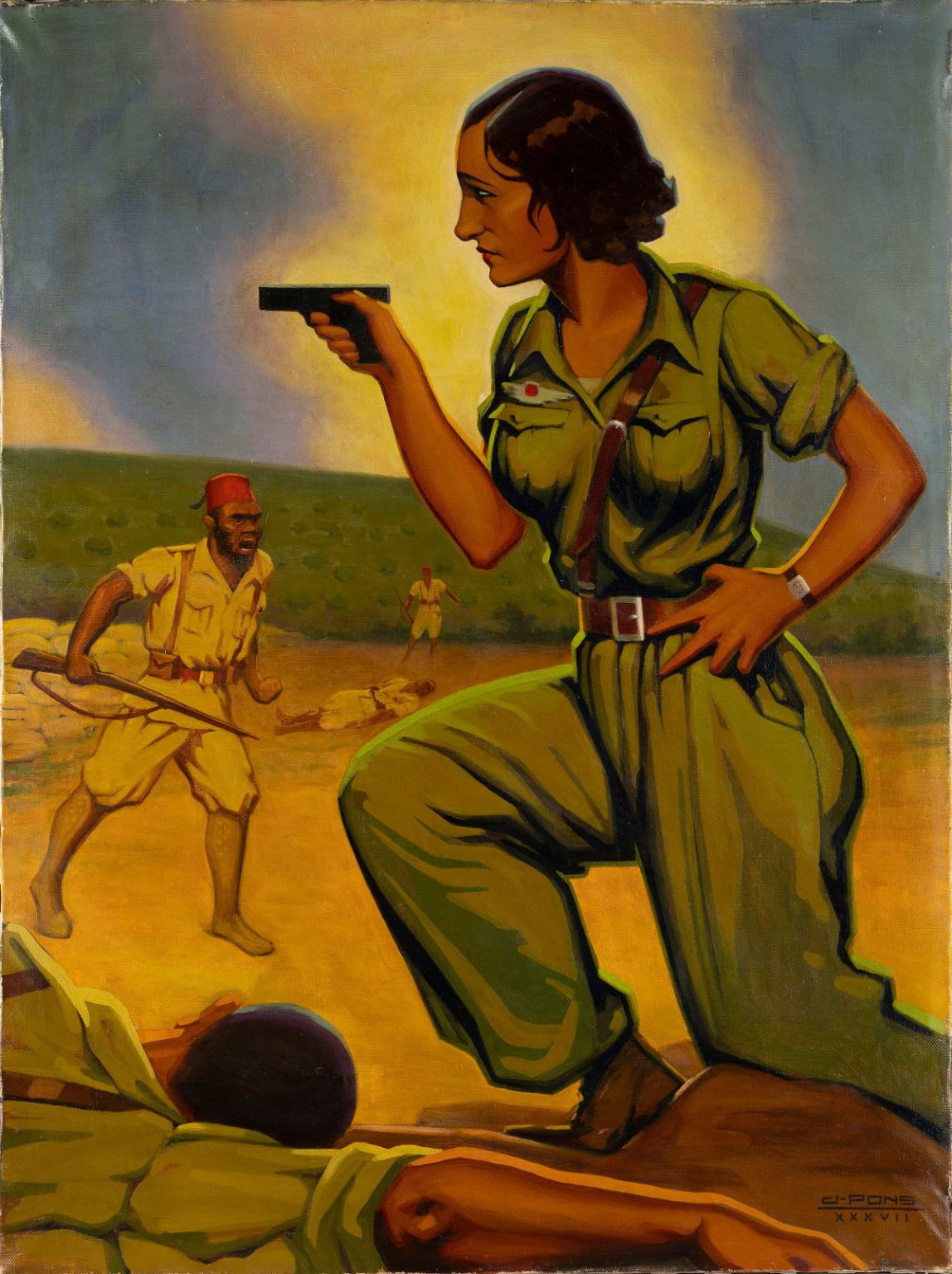
As we commemorate the eightieth anniversary of the end of this war against fascism and militarism (3 September 1945), the No Cold War collective issues the Santiago Appeal, a plea against war and for peace. We urge you to sign it, share it, and get others to sign it so that – like the Stockholm Appeal of 1950 – we can get millions of people to adopt no pasarán (they shall not pass) as our watchword. You can read it below:
War is the ultimate betrayal of human creativity, life’s worth, and the planet we share.
Eighty years ago, the United States dropped the first atomic bombs, awakening a weapon of unparalleled horror that still threatens us all.
Millions died defeating fascism and militarism; among them were the Soviet and Chinese people who made extraordinary sacrifices and bore the heaviest burdens.Their courage demands more than memory; it demands action.
We reject the endless cycle of violence fuelled by imperialism and greed.
We demand a future where peace, justice, and shared prosperity prevail – where humanity lives in harmony with nature, protecting the Earth for generations to come.
Disarm now, end militarisation, and build a world where all life can thrive.
US President Donald Trump and Russian President Vladimir Putin met in Alaska on 15 August. It was the first such meeting between the presidents of Russia and the US in seven years (the last meeting was in 2018, when Putin and Trump met in Helsinki, Finland). There was no breakthrough and there is unlikely to be any breakthrough to reduce tensions between the US and Russia, or indeed, the US and China. But these talks are important. They are a return to diplomacy, an essential element of peacemaking. The appetite for further war simply does not exist around the world, although one would not know that from looking at the atlas of evil that continues to rattle our spirits (from Gaza to Sudan). During the Putin-Trump summit, Pope Leo XIV said that ‘today, sadly, we feel powerless before the spread of violence in the world – a violence increasingly deaf and insensitive to any stirring of humanity’. The idea of deafening violence and violence that is unwilling to listen is factual; it is the attitude of Israeli Prime Minister Benjamin Netanyahu, who continues to insist on the genocide against the Palestinians.
The idea of violence and silence is gripping, especially given the noise of war itself. No surprise that Gennady Gor (1907–1981), who lived through the Siege of Leningrad (1941–1944) and wrote surreal poetry about it, ended up becoming a major science fiction writer. War has an element of science fiction to it, with the most advanced technologies used for the most barbaric means. Here is one of Gor’s poems from the siege where millions died to defend the world from fascism:
The creek sick of speech
Told water it took no side.
The water sick of silence
At once began again to shriek.
No pasarán.
Written by Vijay, via The Tricontinental Institute for Social Research
Share this content: