Typhoon Ragasa shed a light on the enduring legacy of political corruption in the Philippines.
Article by Robin Vochelet of Pandan Brief.
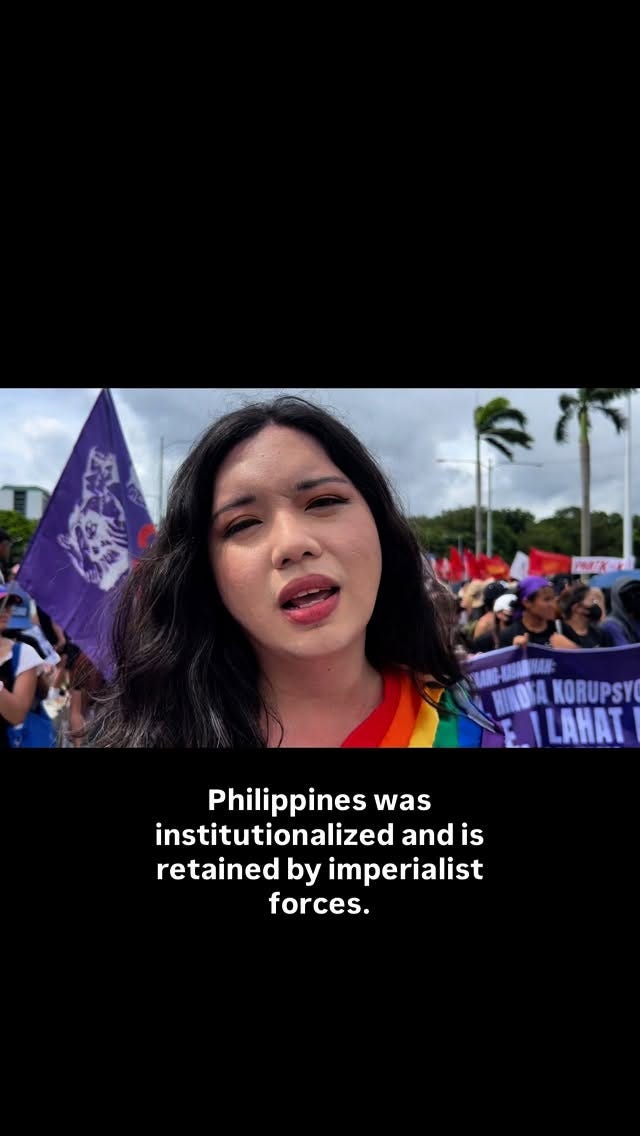
On Sunday, September 21, tens of thousands of Filipinos took to the streets of the country’s capital in Manila, as Typhoon Ragasa—also known as Super Typhoon Nando—was wreaking havoc in northern Luzon.
At the heart of this mass gathering: a demand to President Ferdinand “Bongbong” Marcos (thereafter Marcos Jr.) to implement sweeping structural reforms to tackle systemic corruption, which has plagued the social, political, and economic development of the Southeast Asian country since gaining independence from the United States in 1946.
As one of the countries most prone to tropical cyclones, flood infrastructure is a critical development for the Philippines. However, testimonies at a Senate inquiry earlier this month suggested widespread corruption and misuse of the considerable public funds allocated to these projects.
Philippine media outlet Rappler reported that up to 25% of each project’s budget end up as kickbacks, cash bribes, or are otherwise embezzled by contractors. As a result, many turn to low-quality materials to cut corners, while others deliberately inflate the construction costs of the project to make up for embezzled funds. In more extreme cases, it was reported that some of these projects, including one secured with public funding, had never even been built.
Since taking office in 2022, Marcos Jr. has rolled out over 9000 flood control projects, many of which have proved useless in the face of a particularly difficult year with regards to tropical cyclones and weather-related disasters. Faced with the onset of nationwide protests last week, and an ongoing government probe into the issue, he swore to inspect these projects, having since fired 4 public works officials and suspended 16 others.
His administration has also cancelled ₱252 billion worth of flood control projects planned for next year (around US$4.33 billion) and announced a tightening of the approval process for public funds, as well as an independent commission to investigate projects developed over the past decade.
For most Filipinos, however, these first steps barely scratch the surface of a massive iceberg that has weighed the country down for several decades.
The protests, mostly peaceful across the country, were met with violent crackdowns from police forces in Metro Manila, resulting in the arrest of over 200 attendees, some of whom are minors. A significant amount of protesters are young, with Gen Z youths taking the lead in many urban centers across the country.
Many of them started voicing out their frustration with rampant corruption about a month ago, around the time when similar protests erupted across neighbouring Indonesia. Filipino youths took to social media to call out “nepo babies,” children of government officials, civil servants, and contractors who flaunted their lavish lifestyles online.
Chanel bags, Ferraris, private jet uses, and weekend trips to Paris are only a few examples of the types of public spectacles children of wealthy officials and contractors would advertise on their social media, in grim contrast with the realities of the country’s middle and working classes, left to wade through the floods.
On Reddit, for instance, r/lifestylecheckPH gained over 7000 followers within a few days of its creation on August 24. Users took to this thread to highlight social media posts from children of public servants, exposing their shameless bragging.
Beyond the already implicating act of embezzling public money, the online spectacle of personal wealth exacerbates a disconnection between Philippine political elites and the country’s large working class, whose money was funnelled towards financing those lavish lifestyles.
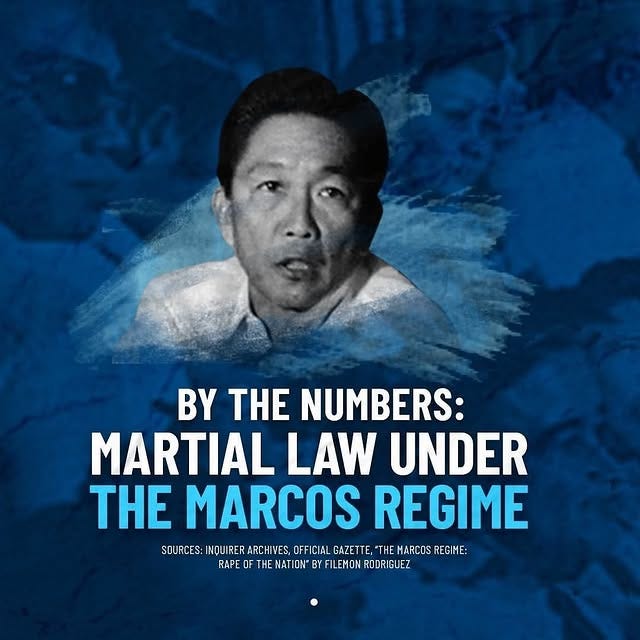
For older Filipinos, this is one too many parallels with how the Marcos family ruled over the Philippines from 1965 until 1986, starting with the election of Ferdinand Marcos—also known as Marcos Sr.—to the presidency. After enjoying a semblance of popularity in his first term, when he pursued infrastructure projects funded by foreign debt, he became increasingly authoritarian throughout his second term, eventually ruling as dictator, along with his wife Imelda, when he declared martial law in 1972.
Under martial law, disappearances and extrajudicial killings became state policy. This resulted in over 70,000 people being jailed, 34,000 tortured, and over 3,200 killed according to Amnesty International. Over 8,000 journalists lost their jobs, and only two newspapers survived, out of the 18 registered before 1972. Growing foreign debt further entrenched political dynasties at home, concentrating wealth in the hands of a few cronies while almost 1 in 2 Filipinos lived in poverty.
As First Lady, Imelda used public funds to build grandiose architectural projects in impossibly short order (coining the term “edifice complex”), host extravagant parties, fund lavish state visits, and expand her own personal shopping collection. She amassed a collection of over 3000 shoes, as well as personal art and jewellery, funded entirely by taxpayer money.
Public discontent over the extent of corruption started in the early 1980s, paving the way for the Marcos’s downfall. The assassination of political rival Benigno “Ninoy” Aquino upon his return to Manila in 1983 became the catalyst for the 1986 People Power Revolution, led among others by Ninoy’s widow, Corazon “Cory” Aquino. The Marcos family was ousted and fled to Hawaii, with help from the US government, while Cory succeeded Marcos Sr. as president.
Estimates posit that by the time they were deposed, the Marcoses had stolen up to US$10 billion from the Philippine people, earning them the “Greatest Robbery of a Government” distinction from the Guinness World Records.
As such, it’s safe to say that pocketing, misuse, and spectacle of public money are traditions for political elites, akin to a cynical rite of passage seeking to remind the people of the postcolonial development and prosperity they aren’t given the chance to experience. This reality also points to a continued legacy of extraction and dispossession that never really went away, much like the Marcoses.
Following Marcos Sr.’s death in 1989, the family came back from Hawaii in 1991, with Imelda set to face charges for corruption. Despite her court cases, she re-entered politics, unsuccessfully running for president in 1992 and 1998, instead serving in the House of Representatives from 1995 to 1998, and 2010 to 2019.
More staggering was Marcos Jr.’s election to the presidency in 2022, garnering over 31 million (58.77%) of votes, in spite of his parents’ dark legacy in the recent political history of the Philippines. The mere image of the Marcos family once again gathered at the presidential palace for Bongbong’s inauguration, a repeat of his father’s first inauguration in 1965, is likely enough to send chills down the spines of older Filipinos who remember all too well what followed.
In light of this corruption scandal, Marcos Jr. vowed that he wouldn’t spare anyone in the government’s probe, including his relatives. Perhaps unsurprisingly, House Speaker Martin Romualdez, a maternal cousin and close ally of Marcos Jr., is among the key actors implicated in this scandal and targeted by the probe. Old habits die hard, especially when it stays within the family.
For many Filipinos, particularly the generations who lived through martial law and the ensuing People Power Revolution, parallels may be too numerous to be dismissed as coincidental, and are rather worsening symptoms of a disease the Philippines never fully healed from. Arrests in response to mass protests in Metro Manila this past week bear concerning similarities with the kind of repression Marcos Sr. unleashed upon his people under martial law.
The country can hardly claim to move away from corruption when today’s leading political figures are the retired actors and descendants of those that set it back in the first place. 1986 might have marked a turning point in the country’s history, but decidedly not enough to completely do away with the decades of terror, repression, and aggravated poverty that both preceded and succeeded it.
Entrenched political dynasties that have built their wealth off the labour of the Philippine working class must be uprooted if the country wants to move forward.
Read the original article here:
https://pandanbrief.substack.com/p/philippines-flood-corruption-scandal
Share this content: