Testing Coral Restoration
A Hong Kong professor and PhD student have taken to the city’s waters to test new ways of restoring coral in one of the world’s most urbanised marine environments.
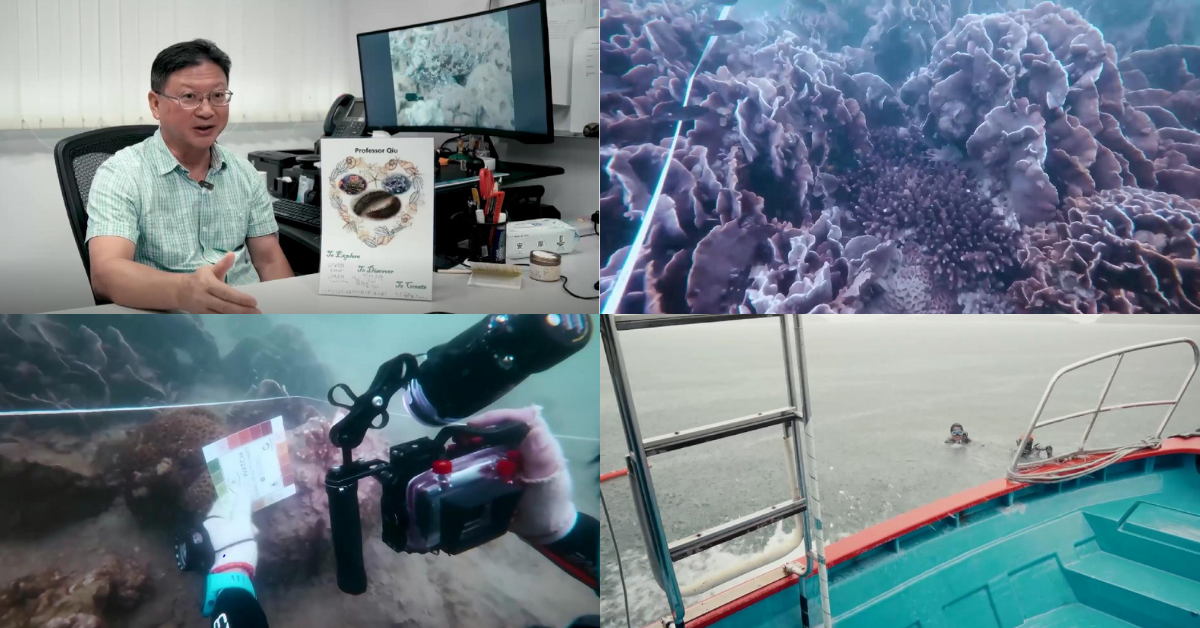
Footage filmed on Friday shows coral fragments being inspected at the Whiskey Beach experimental site, alongside a bottle marking the location.
The researchers are later seen in scuba gear descending to underwater sites, where they inspect coral fragments and assess young corals.
“In the coral attachment experiment here, we are testing different attachment methods, including cement, epoxy, and nail-and-cable ties, to see how well they secure the corals. This project is also aimed at restoring degraded coral communities,” PhD student Loke Hai Xin explained.
“We’ll take some donor colonies and detached coral fragments from here to Tung Sam Kei, where we place them in the coral nursery. Next year, once they have grown and have a better chance of survival, we’ll outplant them in the Tolo Channel,” he continued.
Growing Coral Nurseries
At Whiskey Beach, Loke examined an experiment testing how securely coral fragments can be fixed to the reef.
Loke said the project could help future generations experience Hong Kong’s coral reef ecosystems.
Loke and Professor Qiu Jianwen also visited a temporary coral nursery at Tung Sam Kei.
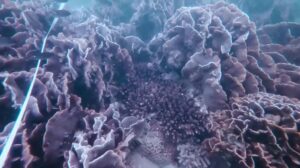
Using a ‘coral gardening’ approach, they cultivated fragments collected from donor colonies and monitored several species.
Working underwater, they checked the corals, compared their colours for signs of health and carried out routine maintenance.
Protecting Marine Ecosystems
Qiu said his experience volunteering with Reef Check exposed him to problems including coral bioerosion and bleaching, prompting him to work on coral conservation.
“We select several species with different growth forms, fragment them and allow them to grow in the nursery. So far, the best-performing species is a branching coral,” he added.
Reef Check is a global non-profit organisation that trains volunteer scientists to monitor coral reefs and kelp forests.
Researchers hope the trials will help rebuild damaged coral communities more effectively as rising sea temperatures, bleaching and other human pressures continue to threaten Hong Kong’s marine ecosystems.
Article by Viory
Related Post:
Floodwater rescue – Kerala locals stay afloat as 27,000 seek sanctuary in emergency relief camps
More than 100 rescued after blaze erupts on passenger vessel in Lombok Strait, Indonesia
Share this content: