Mexico City Protest Begins
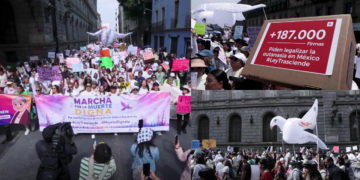
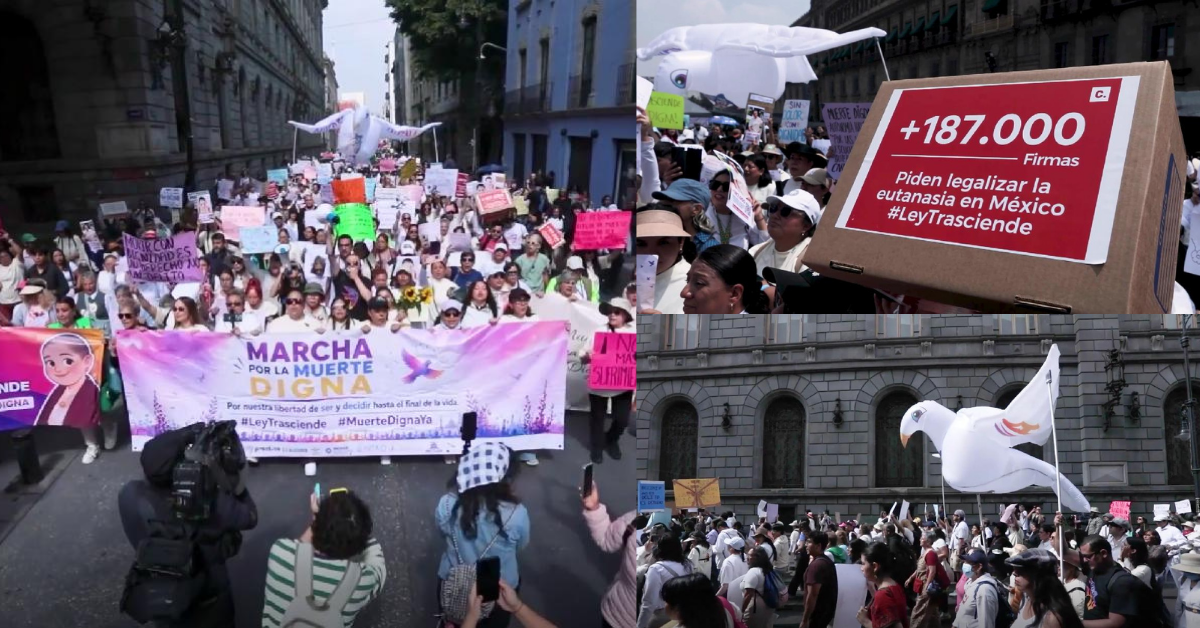
Dozens of people mobilised on Friday in Mexico City in the country’s first march to demand the legalisation of euthanasia and the recognition of the right to choose a dignified death, under the initiative called ‘Ley Trasciende’.
March Heads To Zocalo
Footage shows the mobilisation that set off from the Palacio de Bellas Artes and headed to the capital’s Zocalo. During the day, the demonstrators handed in a draft bill and more than 187,000 signatures gathered in favour of legislation that allows assisted dying under certain conditions.

‘It is the first march in the whole history of our country to demand the right to a dignified death, so that patients without prospects of cure and with diseases at an advanced stage can choose to pass on with dignity,’ said Samara Martinez, proponent of the Ley Trasciende.
Martinez, who faces chronic kidney failure and lupus, noted that everyone should have the right to choose a dignified death, particularly patients with terminal illnesses. ‘Who owns our body? Well, I think we ourselves do. However, today Mexico criminalises compassion,’ she asserted.
Patients Demand More Choice
The mobilisation was also led by people suffering serious illnesses and by citizens supporting the initiative, so that patients can make decisions about the end of their life and receive medical, ethical and humane support during that process.
‘If you have the right to live, you have the right to social security, you have the right to vote. I think you have the right to decide how to die,’ said Laura, a demonstrator in favour of euthanasia, who defended the right to dignity beyond religious precepts.

‘I want to live. I like what I do. But if at some point I have to die, I want to do it with dignity. I want to do it in peace,’ she added.
Mexico Still Bans Euthanasia
For his part, Aurelien, a member of the Dignified Death coalition, explained that, unlike Mexico, other Latin American countries have moved forward in recognising euthanasia and the right to a dignified death, albeit through different legal and judicial mechanisms.
‘If we talk about medical assistance to die, we can face up to 12 years in prison. In Latin American countries it has advanced especially through the courts. In two countries such as Ecuador and Colombia, people sued the state to guarantee their right,’ he explained.
In Mexico, active euthanasia is still not legalised, although the country recognises mechanisms such as advance directives and palliative care for patients in a terminal stage. These provisions allow a person to decide whether or not to undergo treatments intended only to prolong their life, but they do not authorise health professionals to deliberately bring about death.
Article by Viory
Related Post: