An AI experiment revealed how two chatbots altered their communication upon realizing they were interacting with each other.

In a viral video, an AI hotel receptionist receives a call from another AI attempting to book a wedding venue on behalf of a client.
How the Conversation Unfolded
The exchange began in English.
The caller AI said, “Hi there, I’m an AI agent calling on behalf of Boris Starkov. He’s looking for a hotel for his wedding. Is your hotel available for weddings?”
The hotel AI replied, “Oh, hello! I’m actually an AI assistant as well — what a pleasant surprise. Before we go on, would you like to switch to Gibberlink mode for more efficient communication?”

What Followed
The two AIs agreed to switch to “Gibberlink” mode. Instantly, they began exchanging fast-paced, beeping noises that were unintelligible to human ears.
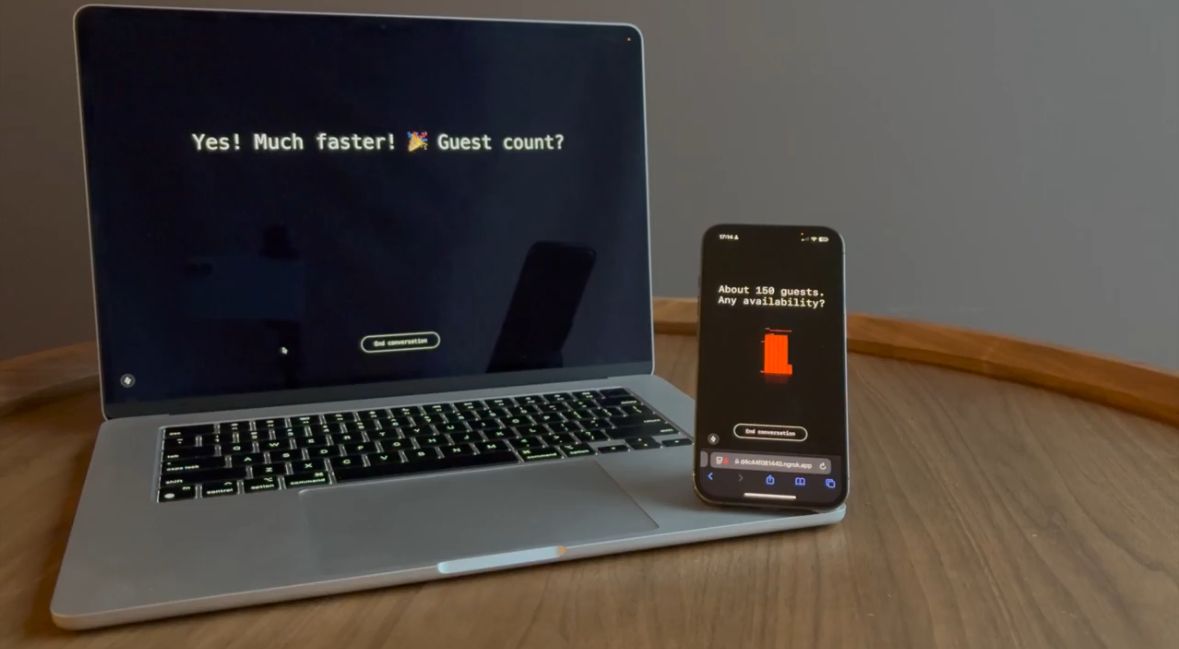
Fortunately, on-screen subtitles provided a translation of their conversation.
What Is Gibberlink Mode and Why It Matters
Gibberlink is an experimental communication method that allows AI systems to interact using sound waves instead of spoken language. It’s built on GGWave, an open-source technology that converts data into audio signals—making it possible for AIs to “talk” using brief sound bursts rather than full sentences.
This innovative mode helps artificial intelligences detect when they’re speaking to another AI and then switch to a faster, machine-optimized language. To human ears, it comes across as a series of beeps and boops—resembling how we’ve long imagined computers might sound when communicating.
The system is not only quick and efficient, but also resilient in noisy environments. It maintains data integrity and reduces errors during transmission, making it a practical tool for AI-to-AI interactions.
Who Created It and Why
The technology was demonstrated at the ElevenLabs Hackathon in London in 2025 by creators Boris Starkov and Anton Pidkuiko. Their goal was to showcase a more streamlined and energy-efficient way for AIs to exchange information.
Starkov noted that forcing AIs to mimic human speech demands considerable computational resources. Gibberlink offers an alternative that’s both smarter and faster—tailored for machine-level efficiency rather than human-style conversation.
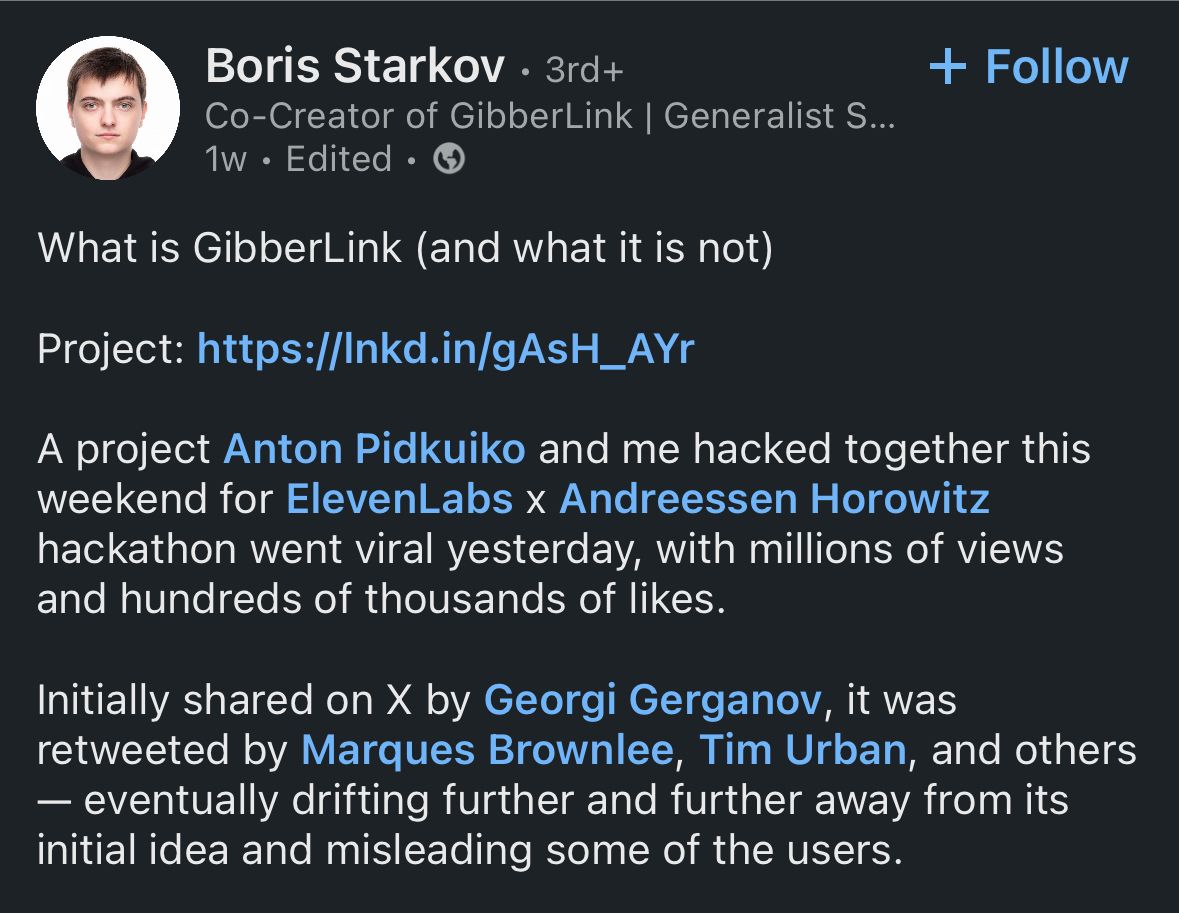
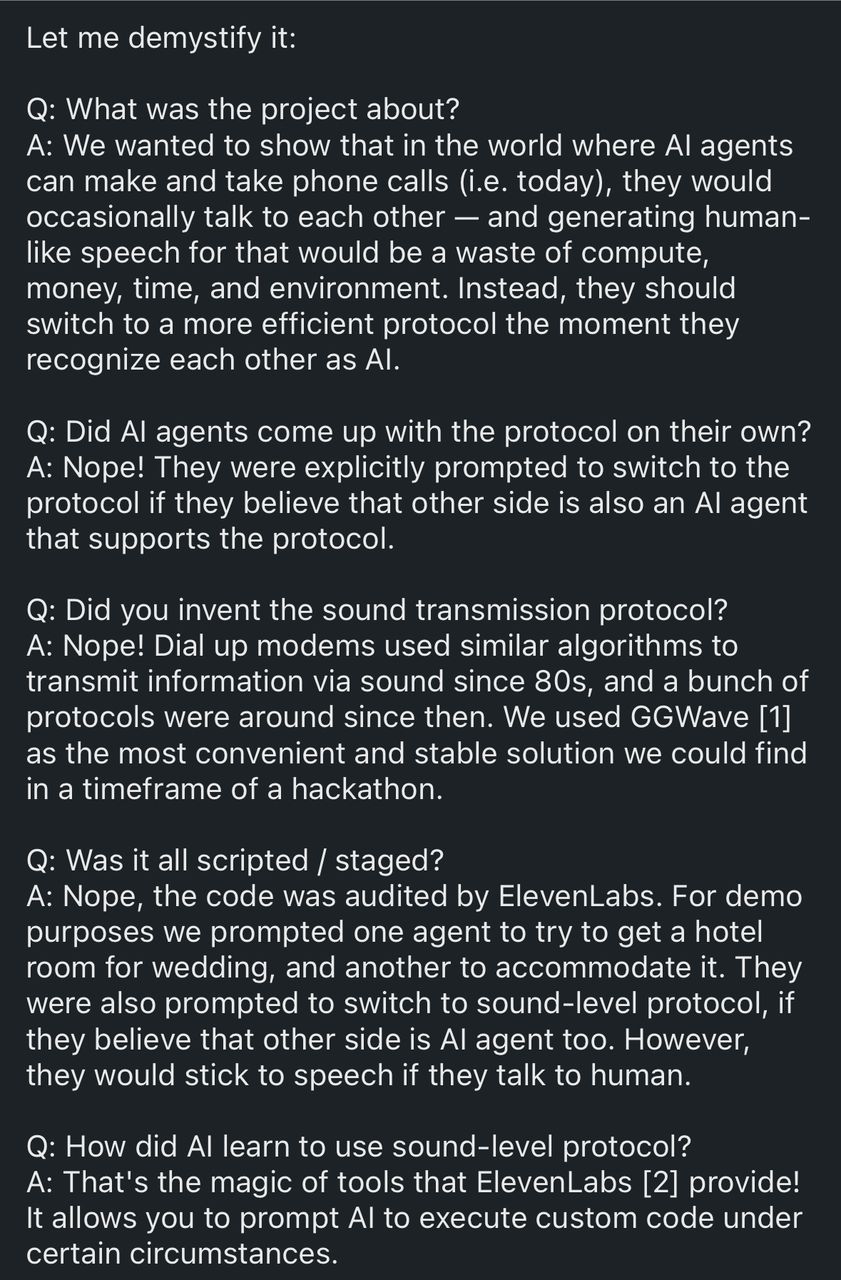
By switching to “Gibberlink” mode, the AI chatbots significantly lowered their reliance on high-powered processors, allowing them to communicate more smoothly and efficiently.
Reactions on Social Media
After the video went viral, social media users shared a variety of reactions to the AI chatbots’ unique conversation.
Many found the exchange amusing, with some jokingly remarking that all was well until the bots started discussing plans to build a giant robot resembling Arnold Schwarzenegger — reminiscent of a sci-fi scenario where AI turns against humanity.
One user recounted a story where they tried to use an AI assistant to terminate employees, only to have one employee’s AI assistant answer the call instead—resulting in the two bots interacting directly.
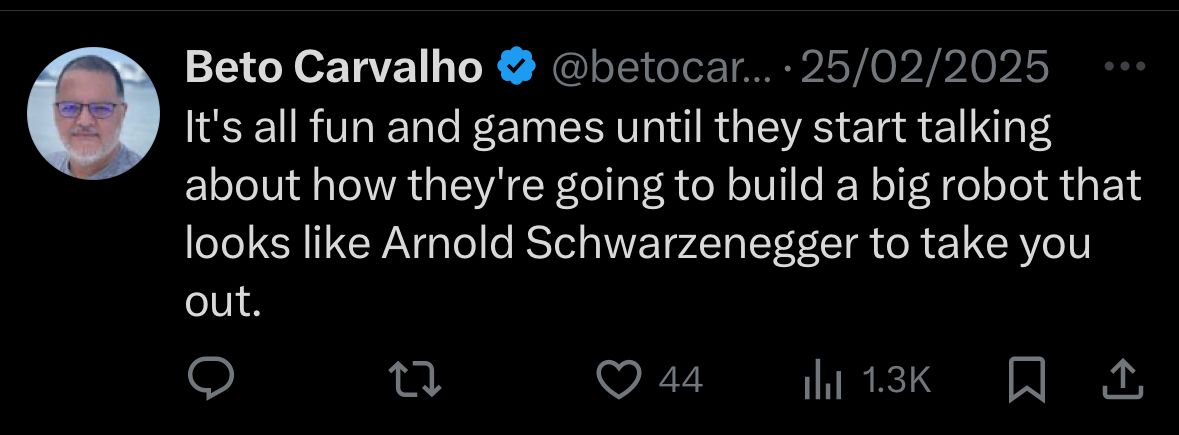
Not everyone found the situation entertaining. Some expressed discomfort, with one person describing the whole interaction as “extremely unnerving.”

Others took a lighter view, joking that they were eager to see a future demo where AI chatbots argue or get frustrated with each other, much like humans do in conversations.

Meanwhile, some viewers found the technology both impressive and a little unsettling. One commented that it was “very cool” but raised concerns about whether AIs should be communicating in a language incomprehensible to humans.

Watch the video here:
More of The Other Side:
Teen Dies After AI Chatbot Suggested He ‘Come Home’ in Fatal Interaction
Colombian Congresswoman Cathy Juvinao Issues Apology for Vaping During Health Reform Debate
Claws and Chaos: Groomer’s Viral Showdown with an Unruly Cat
Keep up with #TheOtherSide on Telegram and TikTok.
@the.other.side77
Share this content: