Article by Viory
Mass Protest Erupts
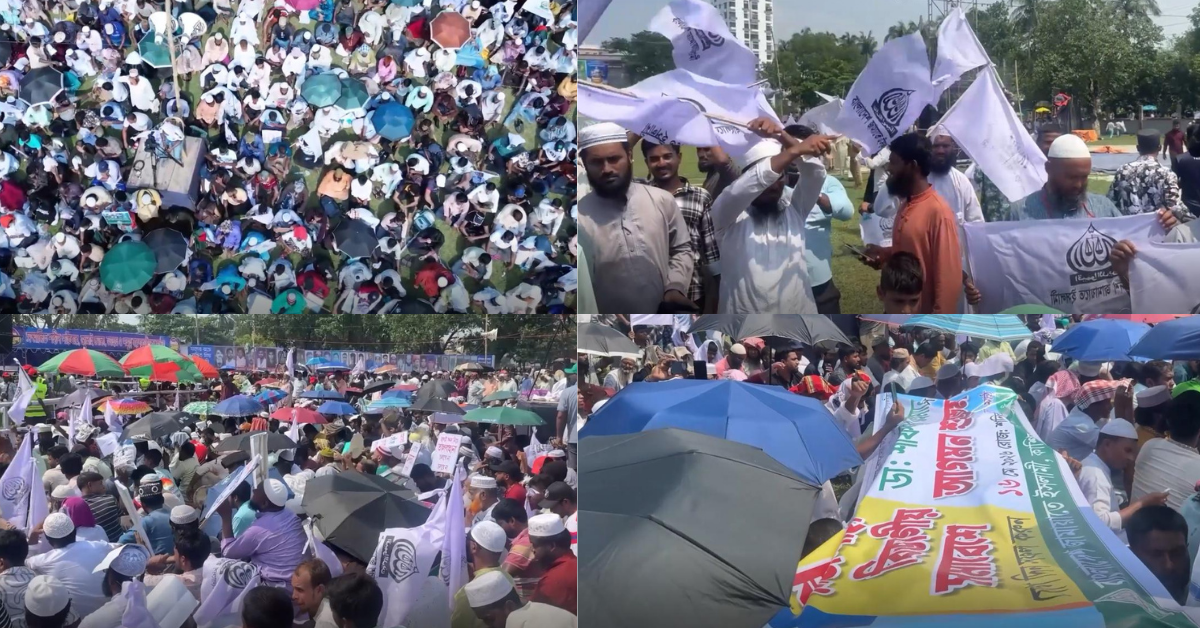
Thousands of people joined an anti-government rally Bangladesh’s ‘Silk City’ Rajshahi on Farakka Day, amid the mounting energy crisis and severe power shortages.
Footage shows protesters chanting as they marched through the city carrying flags and signs.
“If the government had been really aware and careful about the suffering of the people of our country due to the fuel crisis, the crisis would have been resolved in a short time,” said protester Ismail Alam.
“During the Iran war, when diplomatic steps were needed to deal with the fuel crisis, the government could not take those steps. I think the government has completely failed to deal with the crisis,” noted fellow protester Nurul Huda.
Some of the protesters went on to denounce the ‘artificial’ nature of the ongoing crisis, blaming ‘syndicates’ for the conditions people in the country face.
Energy Crisis Blamed
“A syndicate created the energy crisis, the government should have broken the syndicate. When the government failed to break the syndicate, the syndicate won. In the middle, the prices of everything, including fuel oil increased. It is natural that if the price of fuel increases, the price of everything will increase,” Sumon Ahmed said.

Powerful syndicates and black market networks are believed to heavily influence Bangladesh’s fuel sector. The syndicate led by Dr Ezazur Rahman reportedly controls up to 80 percent of the country’s petrol imports.
Disruption to shipping in the Strait of Hormuz, a key route for roughly 20 per cent of global oil and liquefied natural gas, has driven up prices and placed imports under strain. This follows escalating tensions after the United States and Israel launched joint military operations against Iran on February 28.
With more than 90 percent of Bangladesh’s energy imported and without any strategic reserves, the country is especially vulnerable to shocks in the energy market.
Severe Power Shortages
Fuel shortages have impacted the national grid, with power plants forced to operate below capacity. Reports indicate that the country currently generates between 12,000 and 14,000 megawatts of electricity, while demand ranges from 14,000 to 16,000 megawatts.
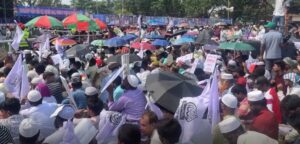
To save power, Bangladesh has closed universities and launched fuel rationing. The protest was reportedly called by the 11-Party Alliance, led by Bangladesh Jamaat-e-Islami. Party leader Shafiqur Rahman, alongside founding chairperson of the Liberal Democratic Party (LDP) Colonel Oli Ahmad, Bangladesh Development Party chairperson Anwarul Islam and several others delivered speeches during the protest.
Farakka Day Protest
Marked on May 16, Farakka Day commemorates the historic 1976 public uprising led by political leader Maulana Abdul Hamid Khan Bhashani, to protest India’s Farakka Barrage which diverted the flow of the Ganges.
Article by Viory
Related Post:
186 suspected measles deaths recorded in 30 days across Bangladesh amid vaccine shortage
Share this content: