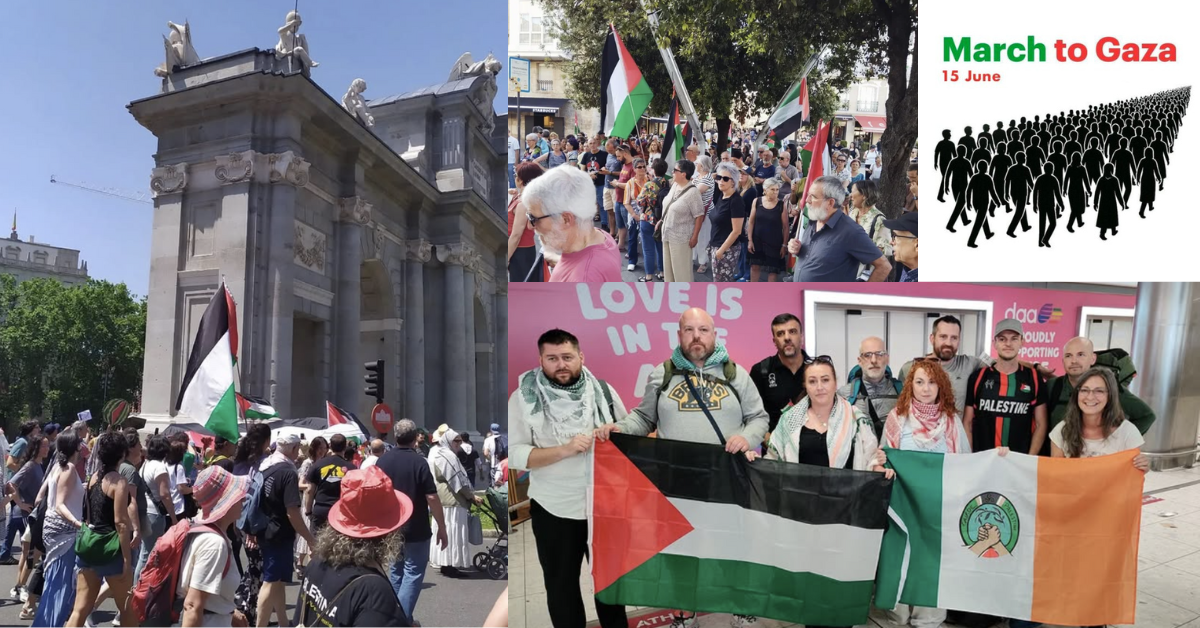
In June 2025, a large-scale, international grassroots initiative—the Global March to Gaza—attempted to break Israel’s total siege on Gaza and highlight the ongoing genocide against Palestinians.
Despite being a peaceful, nonviolent movement aimed at delivering aid and demanding international action, participants faced heavy-handed repression from Egyptian authorities determined to prevent their progress toward the Rafah crossing.
A Movement Born of Urgency
The activists make their message clear: if Israel starves, bombs, and silences Gaza, they will speak for it. The march was physically stopped, but its global impact continues to grow.
Coordinated by civil society groups under the banner of Sumud (Arabic for resilience), the caravan began in Tunis on June 9, bringing together over 1,000 activists from North Africa and Europe. Supported by major Tunisian organisations including the General Labour Union and National Bar Association, the convoy set off for Libya and then Egypt, aiming to walk from Arish to the Rafah crossing.
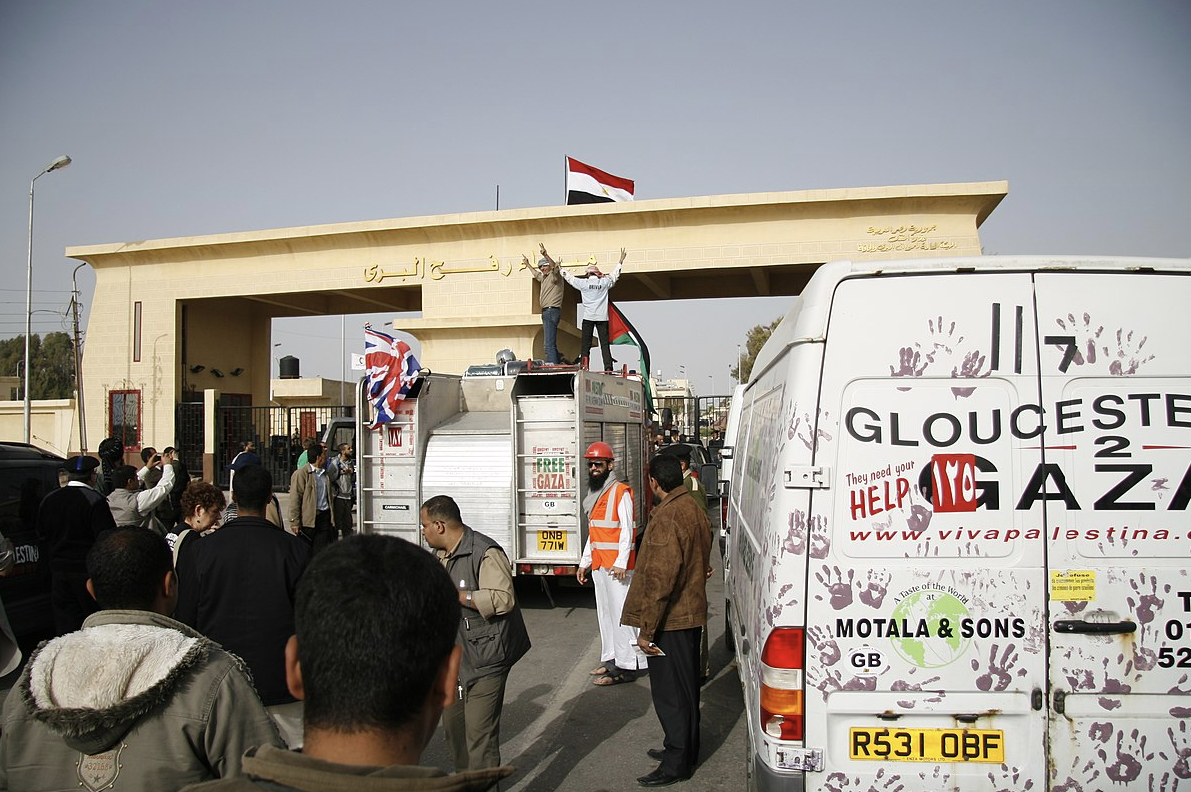
Parallel efforts saw hundreds of other activists from more than 50 countries arrive in Cairo. They planned to join the final leg of the march—an approximately 50-kilometre trek through the Sinai Peninsula—to draw global attention to the siege and demand immediate humanitarian access to Gaza.
Escalating Repression in Egypt
Egypt, despite publicly calling for aid access into Gaza and condemning Israeli actions, reacted to the march with harsh security measures. Authorities refused to grant the necessary permits for the activists to proceed and labelled parts of the route a military zone, effectively shutting down the effort. Egyptian authorities detained or deported dozens of activists, mainly from Europe and North Africa, upon their arrival in Cairo. They delayed, interrogated, or expelled over 170 participants without providing clear explanations.
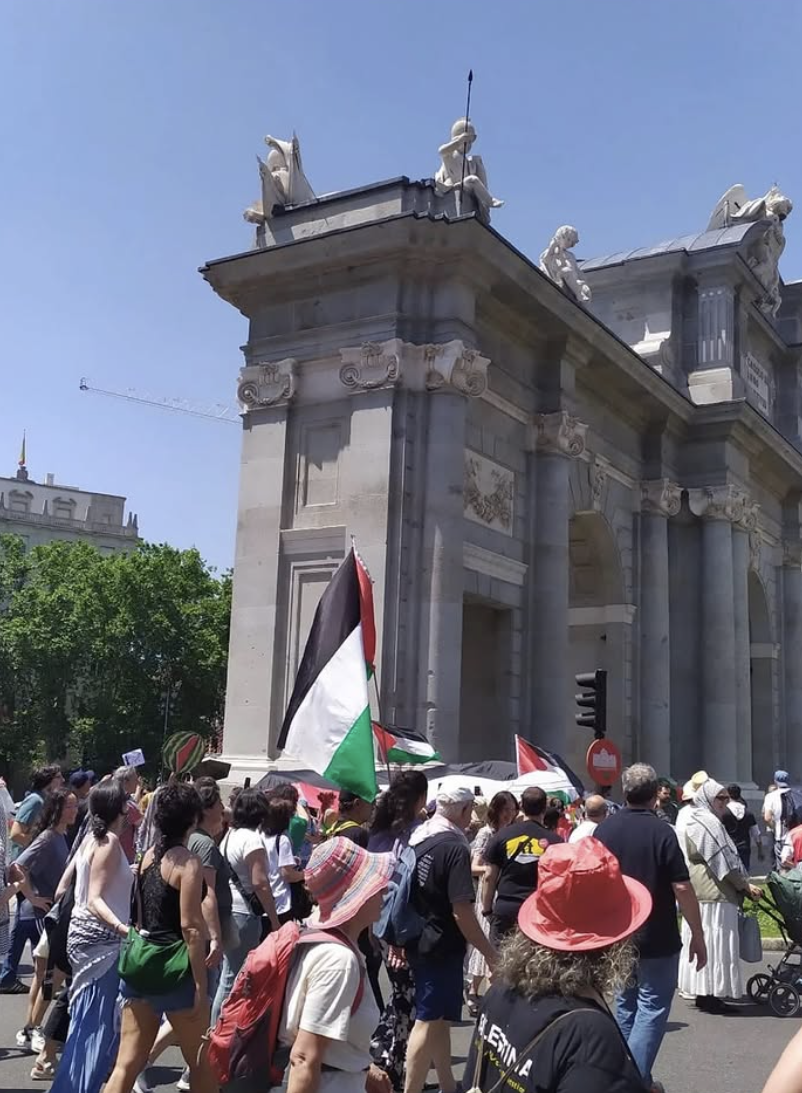
On June 15, plainclothes officers abducted Dr. Hisham El Ghaoui, a French citizen and key organiser of the march, from his Cairo hotel. They also forcibly deported his French wife. Dr. El Ghaoui has since disappeared without contact or updates, and the French embassy has provided no clarity. Many other French nationals began moving between hotels to avoid similar fates.
By June 14, groups of activists gathered near Ismailia, awaiting clearance to proceed. Instead of receiving permission, they were attacked near a checkpoint, further demonstrating Egypt’s hardline stance. The authorities cited national security concerns and their right to regulate movement in sensitive border areas as justification for their actions. The Egyptian government, while officially condemning the genocide in Gaza, remains wary of public dissent that could threaten its relationship with Israel and regional stability.
A March Stopped by Guns, Not Laws
Organisers emphasised that they had followed protocols laid out by Egyptian embassies and communicated with authorities well in advance. Despite their efforts, Egypt treated the humanitarian convoy as a security threat rather than a global civil society movement calling for justice and survival for Palestinians in Gaza.
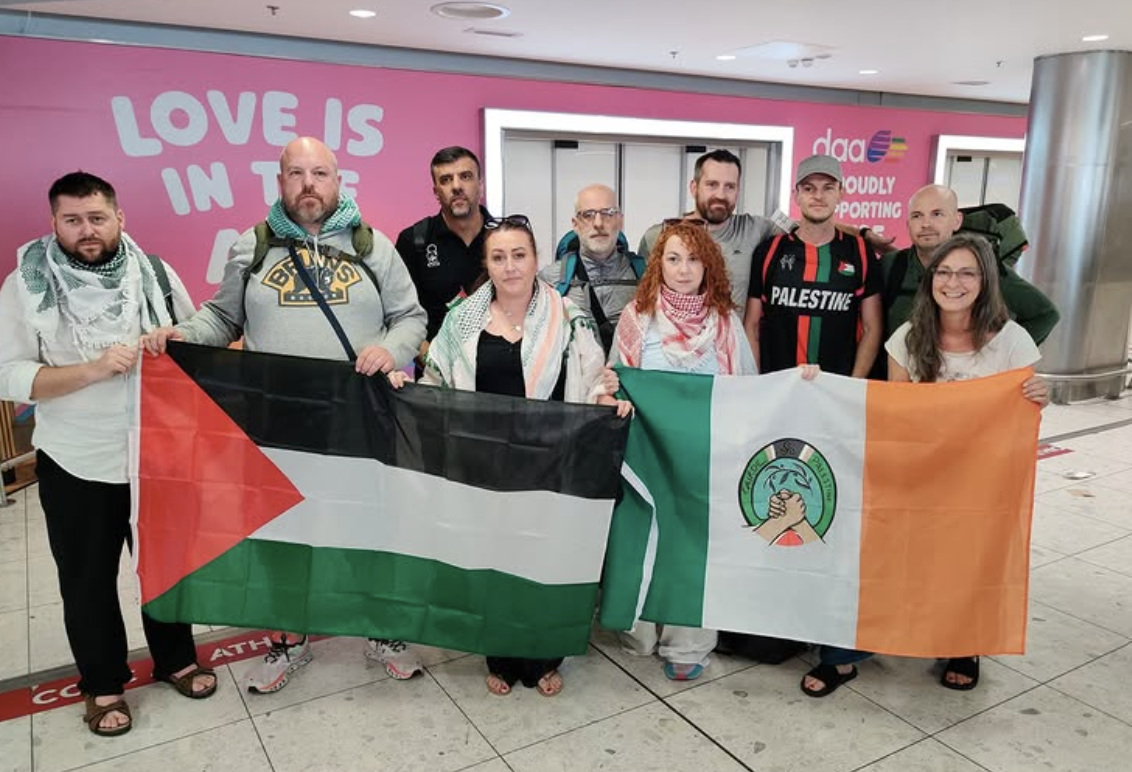
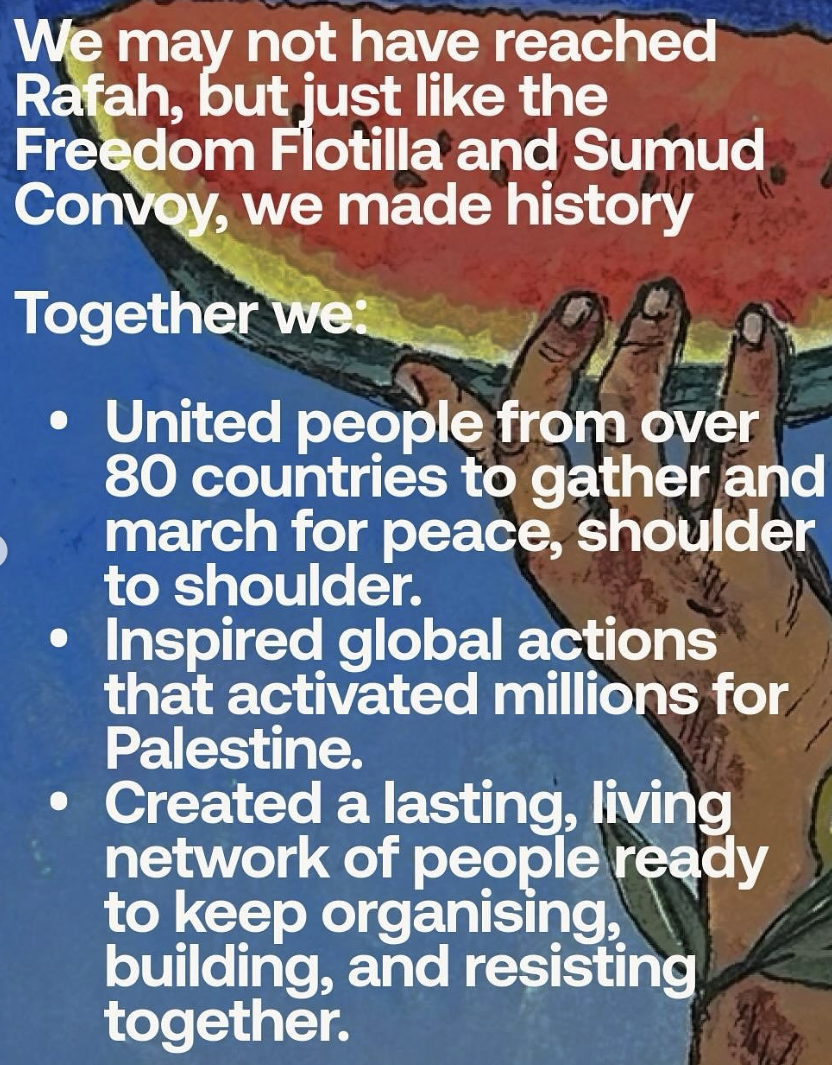
Participants from the Sumud convoy returned to Tunisia on June 20. While they never physically reached Rafah, many declared the symbolic success of the march, stating that the initiative resonated far beyond the border and reached hearts and minds around the world.
Since Israel began its genocidal campaign in October 2023, it has blocked nearly all food, medicine, and fuel from entering Gaza. Humanitarian aid has been weaponised, with civilians shot while queueing for the little that trickles in. Legal scholars and international experts have concluded that the destruction of Gaza’s infrastructure and the systematic deprivation of life-sustaining resources constitute acts of genocide under international law.
The Integrated Food Security Phase Classification (IPC) has warned that nearly half a million Palestinians face starvation, while a million others are barely surviving. Despite some minor easing of restrictions in recent months, these steps fall dramatically short of what’s needed. Israel has dismissed all international warnings, continuing its assault on the enclave unabated.
Global Civilian Resistance
The Global March to Gaza is the latest in a long series of civilian efforts to break Israel’s siege, following the legacy of Freedom Flotillas and aid convoys.
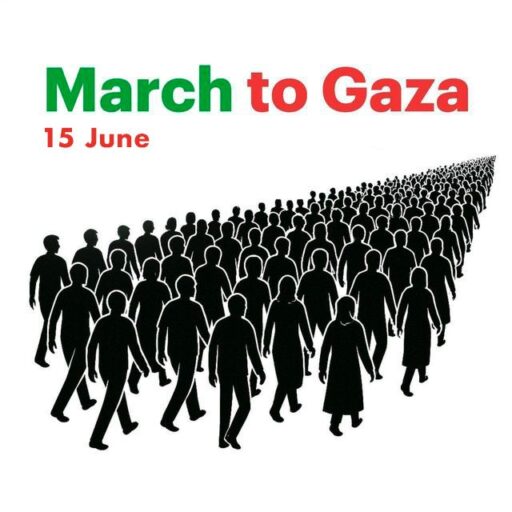
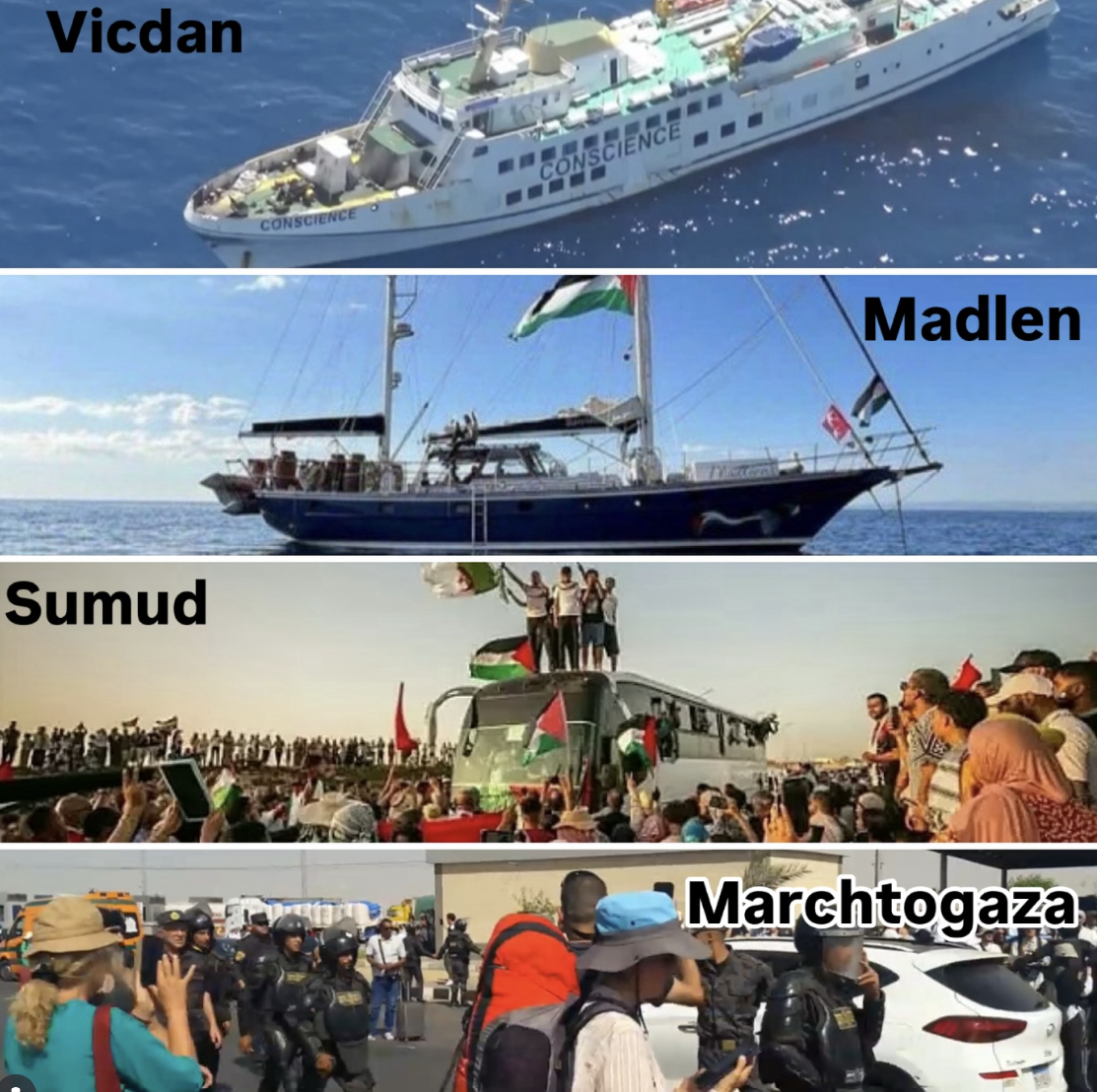
From the land march through North Africa to civil disobedience in Europe, people from all walks of life are mobilising to demand an end to Israel’s genocide. They are not waiting on governments. The activists send a clear message: if Israel starves, bombs, and silences Gaza, they will speak for it.
Although authorities physically stopped the march, its global impact continues to grow. Organisers pledge to continue the struggle—by land, air, sea, and solidarity—until Gaza’s gates open and justice prevails.
Watch a video here:
More of The Other Side:
Italian MP Stages Ghost Costume Protest in Parliament Over Referendum Concerns
‘We Can Kill You Wherever You Are:’ Former Cambodian MP Assassinated in Bangkok; Suspect Charged
Keep up with #TheOtherSide on Telegram and TikTok.
@the.other.side77
Share this content: