Jakarta, Indonesia’s capital and economic hub, is sinking rapidly. A recent Facebook video by ASEAN Skyline showed sea waves pushing against the city’s boundary, with only a thin concrete wall holding them back.

The city, home to over 10 million people, is sinking by up to 25 centimeters each year in some areas. Without intervention, large portions of Jakarta could be underwater in just a few decades.
Why Jakarta is Sinking
Over-extraction of groundwater is the main cause of Jakarta’s subsidence. As the population grows, demand for water increases, leading residents and businesses to rely heavily on underground water sources. This depletes aquifers and causes the ground to sink.
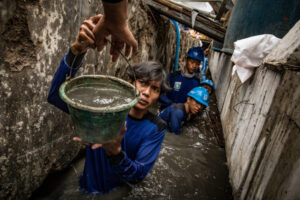
Rising sea levels, driven by climate change, further worsen the situation. Located on swampy, low-lying coastal land along the Java Sea, Jakarta is also prone to coastal flooding.
Impact on Residents
In North Jakarta, some areas have sunk more than two meters in the past decade. Residents constantly battle rising waters in their daily lives. Roads frequently become impassable, halting transportation, and businesses struggle to stay open.
In addition to physical damage, floods expose residents to serious health risks, with waterborne diseases like cholera and dengue fever becoming more common.

The city’s poorest communities suffer the most, as they often live in flood-prone areas. With few resources to relocate or invest in flood defenses, these residents face ongoing vulnerability and uncertainty.
Government Efforts to Combat the Crisis
The Indonesian government has taken steps to address Jakarta’s sinking issue. It is building a massive seawall along the northern coast, known as the “Giant Sea Wall,” to protect the city from rising sea levels. However, experts warn that the seawall provides only temporary relief. Without addressing the over-extraction of groundwater, the city will continue to sink.

To reduce the strain on Jakarta, the government has proposed relocating the capital to Nusantara in East Kalimantan, Borneo. President Joko Widodo’s administration is backing this long-term plan, which aims to lower Jakarta’s population and resource demands. However, the relocation will take years, leaving residents in need of more immediate solutions.

As Jakarta faces worsening floods, many citizens have taken the lead in building resilience. Locals have developed early warning systems and adapted their homes to reduce flood damage. Meanwhile, the government’s response has focused more on evacuations than prevention. Experts argue that the government must combine structural measures, like seawalls, with improved water management to effectively tackle the growing flood risks. They caution that citizen efforts alone won’t be enough to address the city’s increasing vulnerability.
Watch the video here:

Share this content: