Article by Viory
Ancient Predator Unearthed
A team of Argentine and Japanese researchers discovered fossilised remains of a new species of carnivorous dinosaur that inhabited southern Patagonia some 70 million years ago, shortly before the mass extinction of the dinosaurs. The dinosaur has been named ‘Kank Australis’.
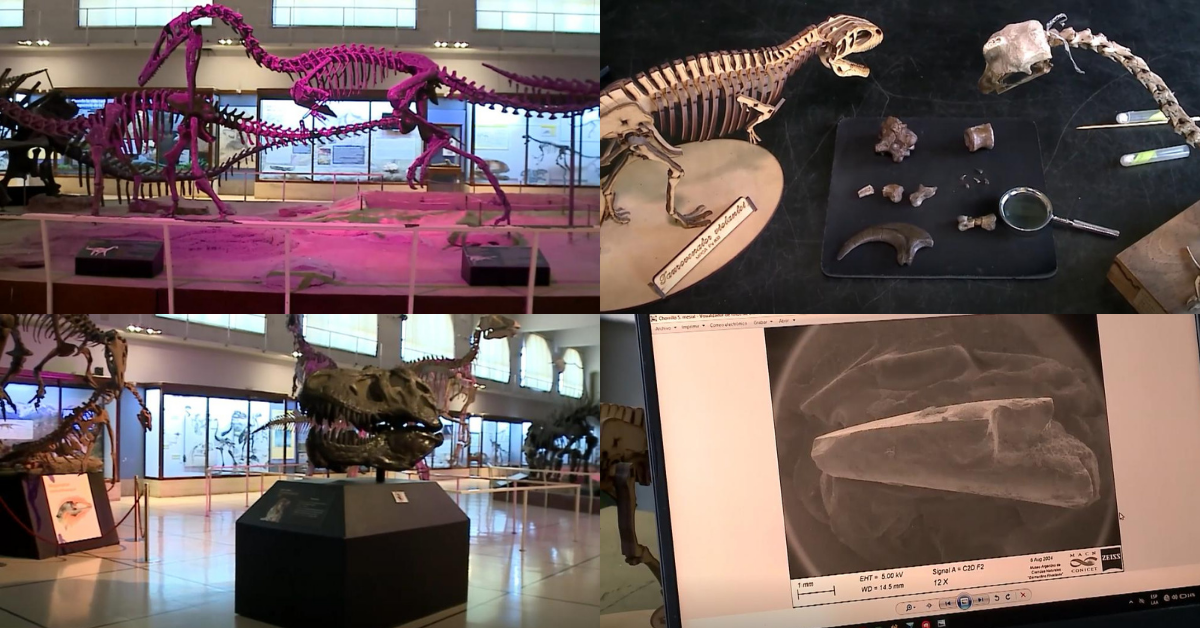
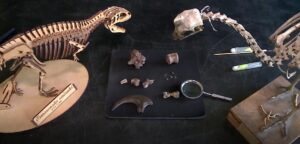
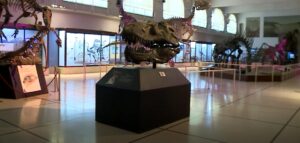
Footage recorded in Santa Cruz, where the discovery was made, shows the recovered remains which are being analysed by paleontologist Matias Motta of the Bernardino Rivadavia Argentine Museum of Natural Sciences. Motta indicated that the discovery was made in the town of El Calafate.
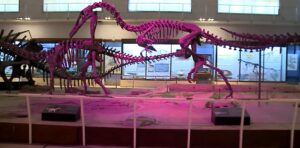
“This dinosaur is unique. It belongs to the Unenlagid group, a group of raptor dinosaurs. Perhaps the most well-known members of this group are the velociraptors from the Northern Hemisphere,” he explained.
Built For Fishing
The dinosaur measured around two meters long and possessed the typical curved and sharp ‘raptor claw’ on one of its feet, which it used for hunting. However, the researcher pointed out that it likely had piscivorous habits, meaning it fed primarily on fish, as a result of its teeth.
“In this case, this dinosaur had conical teeth with ridges that we believe would have served precisely to allow it to fish, preventing fish from escaping when it caught them in the water,” he added.
A study of the neck vertebrae also allowed researchers to infer that the animal had great cervical mobility, comparable to that of modern waterfowl, such as storks, which facilitated its hunting in the water.
Life Before Extinction
“It reminds us a lot of the fishing habits of storks or herons. So we’re talking about a dinosaur that would have lived in aquatic environments, such as lagoons or rivers, a landscape very different from that of present-day Patagonia,” Motta noted.
According to the paleontologist, this discovery has revealed not only the characteristics of Kank Australis, but has also provided insight into its life just before the extinction of the dinosaurs in Patagonia.
International Research Effort
In addition to the Bernardino Rivadavia Argentine Museum of Natural Sciences, specialists from the Félix de Azara Foundation and scientists from the National Museum of Nature and Science are also participating in the research.
Article by Viory
Related Post:
Roscosmos Cosmonauts install radio telescope on ISS Space Station for Solar monitoring