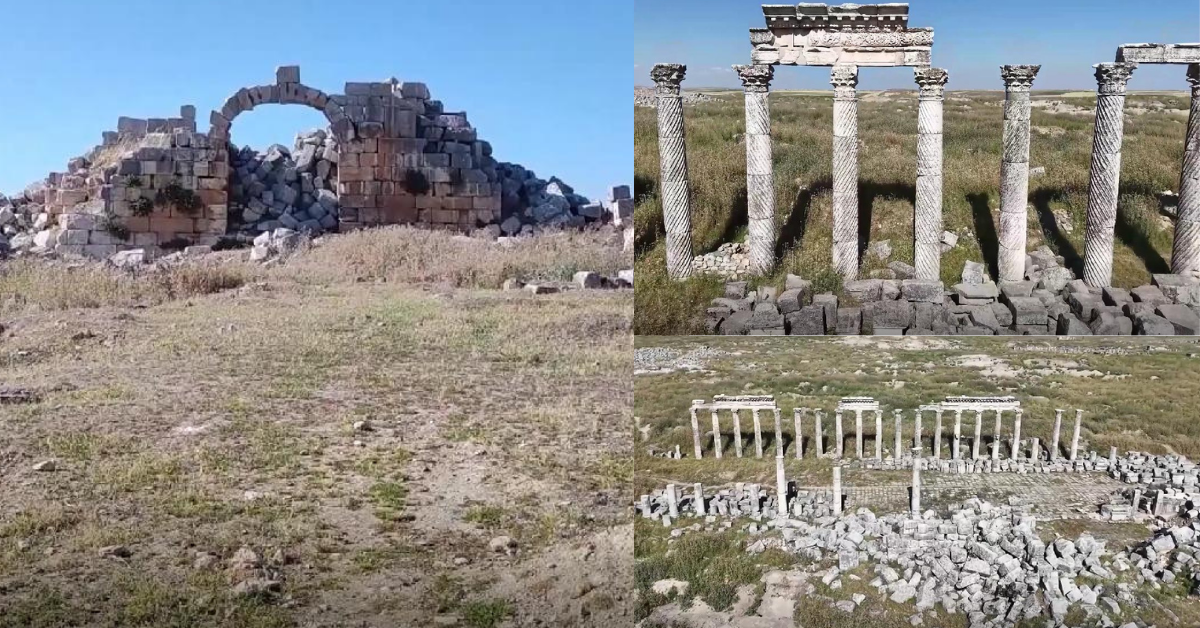
Syria’s ancient archaeological site of Afamia has been added to the Islamic World Heritage Lists of the Islamic World Educational, Scientific and Cultural Organization (ICESCO), ending a 14-year gap in new Syrian registrations.
Located in central Syria, Afamia is more than 2,300 years old and is widely known for its rich history and remarkable mosaic art. Syrian researcher Mustafa Raadoun said the city was once an important centre for mosaic production, with artworks from Afamia reaching different parts of the Mediterranean region, including Tunisia.
According to Raadoun, many churches and historic buildings across the region were decorated with mosaic floors created in Afamia. He said the city played a major role in spreading architectural and artistic traditions throughout the ancient Mediterranean world.
Historic City with Ancient Legacy
Footage released on Monday showed long rows of marble columns stretching across the archaeological site. Ancient inscriptions remain visible on many of the structures. The city was fortified and expanded around 300 BC by Seleucus I Nicator, one of Alexander the Great’s generals, who named the city after his wife, the Persian princess Apama.

Raadoun described Afamia as one of the few ancient cities that still retains its defensive walls almost entirely intact. The wall extends for about seven kilometres and includes towers that have largely survived through the centuries.
Heritage Status Offers Protection
The researcher said inclusion on the heritage list is important because it provides stronger protection for the site and its artefacts. Official registration can help authorities recover historical objects if they are removed illegally and later found abroad.

On May 25, Syria’s Directorate General of Antiquities and Museums announced that nine sites had been added to the ICESCO heritage lists. Other newly recognised landmarks include the Umayyad Mosque, Al-Azm Palace and Damascus Castle in Damascus, Salah al-Din Castle in Latakia, the Omari Mosque in Daraa, the Waqf Library in Aleppo, and the archaeological site of Al-Lajat.
The new registrations mark Syria’s return to the international heritage registry after a 14-year hiatus and highlight efforts to preserve some of the country’s most significant historical landmarks.
Article by Viory
Related Post:
Devastating drone footage as MASSIVE blaze guts whole neighbourhood in Jakarta, Indonesia