Article by Viory
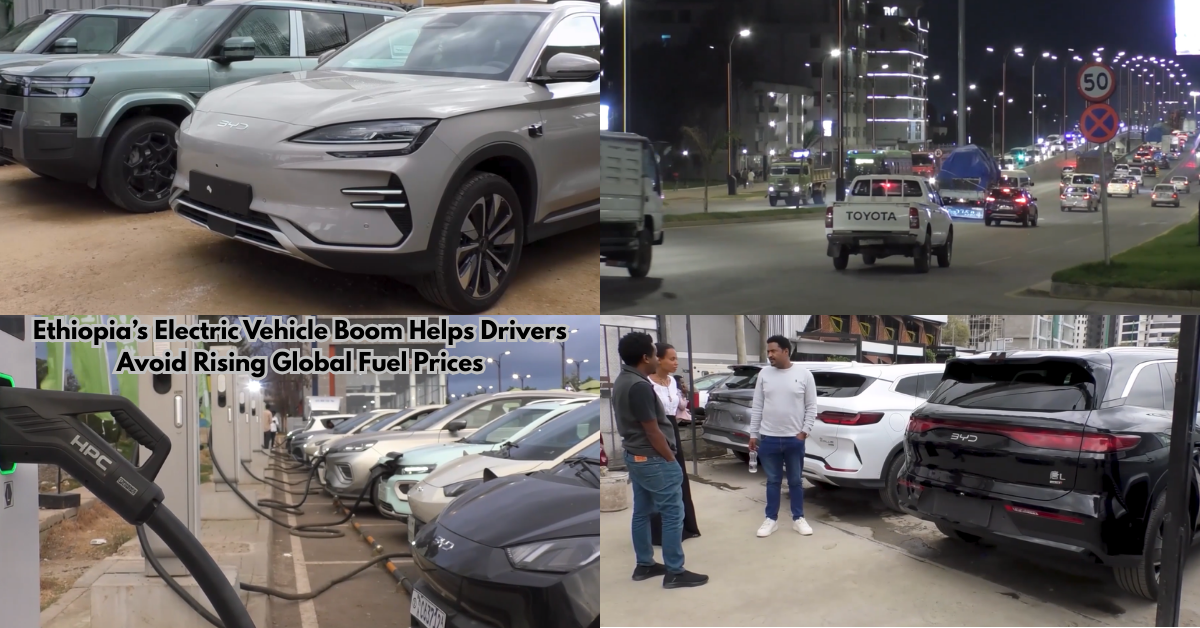
Addis Ababa is seeing a surge in demand for electric vehicles after Ethiopia became the first nation to ban private imports of internal combustion engines in January 2024, targeting gasoline and diesel cars to reduce annual fuel import costs by over $5 billion.
Footage from Monday shows a tour of EV showrooms in the capital. Electric buses can also be seen in the city’s public transport fleet, signalling a broader shift toward cleaner urban mobility.
Meklit Yohannes, Marketing Manager at YOYO Motors, explained that the Ethiopian market had seen a paradigm shift.
“About three years ago, people had a hard time accepting it,” Yohannes said. “But now, people understand it well, and it is easier for us to convince them […] In fact, electric cars are becoming more popular than gasoline and hybrid cars.”
For many Ethiopian consumers, an electric car is no longer just an eco-friendly choice; it is a practical solution to combat global market pressures, including recurring fuel shortages and price hikes.
It comes as global energy markets reel from the military operations launched by the US and Israel against Iran on February 28. Tehran responded with strikes on Israel and US assets in the region, with explosions reported in countries right across the Gulf.
The Strait of Hormuz, which typically handles 20 per cent of global oil traffic, has been effectively closed, sending crude prices soaring past $100 a barrel.
“We can charge it anywhere – even at home – and we don’t have to queue for gas. In this situation, it is preferable,” said EV owner Kokeb Muluchewa.
Other users praise the ease of maintenance and the efficiency of dual-battery systems, which ensure long operational life, making electric cars a smart long-term investment amid current economic conditions.
Ethiopia spends $4–5 billion annually on fuel imports – a major drain on foreign reserves.
With the Grand Ethiopian Renaissance Dam (GERD) now fully operational as of late 2025, the country has a massive surplus of cheap, renewable energy.
Transitioning to EVs allows the African nation to power its transport sector using 100 percent locally produced hydroelectricity.
Article by Viory
Related Post:
En route – Russian aid for Iran touches down in Azerbaijan ahead of onward journey
The UK Government Releases Epstein Files Related to Former US Ambassador Peter Mandelson
Share this content: