Malaysia is a significant trading partner of the United States, and this relationship plays an essential role in the bilateral economic ties between the two nations.
The trade partnership robustly exchanges goods and services, primarily in electronics, machinery, palm oil products, and natural resources. The U.S. Treasury’s decision to remove Malaysia from its currency monitoring list reflects the balance of this trade relationship.
Impact of Removal from the Monitoring List
Malaysia’s removal from the U.S. currency monitoring list in 2024 has positive implications for this trade relationship. The designation of being on the list often signals concerns about a country’s currency manipulation to gain trade advantages. With Malaysia no longer under this scrutiny, it paves the way for smoother economic collaborations, potentially boosting investor confidence.

Malay Mail reports, governor of Bank Negara Malaysia (BNM) Datuk Seri Abdul Rasheed Ghaffour said, ‘We welcome this development with Malaysia being removed from the currency manipulation monitoring list.’
Bank Negara Malaysia, the country’s central bank, repeatedly emphasizes that the Malaysian ringgit operates under a flexible exchange rate regime and that foreign exchange interventions aim to stabilize market volatility rather than manipulate trade advantages. The removal from the list validates these claims and underscores Malaysia’s commitment to global economic standards.
U.S.-Malaysia Trade Relations
The United States is one of Malaysia’s largest export destinations. According to OEC, in August 2024, Malaysia saw a positive trade balance of MYR 4.2 billion in its trade with the United States, with exports totaling MYR 19.6 billion and imports reaching MYR 15.4 billion. Compared to the same period in 2023, Malaysia’s exports to the U.S. rose by MYR 6.13 billion (45.4%), from MYR 13.5 billion to MYR 19.6 billion. Meanwhile, imports from the U.S. surged by MYR 8.28 billion (116%), increasing from MYR 7.16 billion to MYR 15.4 billion. This trade dynamic positions Malaysia as a key player in global supply chains, particularly in the semiconductor and electronics industries.

Malaysia plays a particularly significant role as a major exporter of electrical and electronic goods, given the high demand in the U.S. for advanced technological components. These items are integral to industries such as telecommunications, computing, and renewable energy, making Malaysia a vital trade partner for the U.S.
The Role of Trade Agreements and Alliances
Malaysia and the U.S. are also members of broader trade agreements, such as the Indo-Pacific Economic Framework (IPEF), which seeks to enhance economic cooperation in the region. Malaysia’s inclusion in regional trade alliances helps bridge economic interests.

These agreements facilitate Malaysia’s exports of key goods, particularly electronics, to the U.S., while fostering greater collaboration in areas such as sustainability and digital trade. The removal of currency-related scrutiny strengthens Malaysia’s ability to engage with the U.S. on equal footing within these frameworks.
The U.S. Currency Monitoring List: How It Works
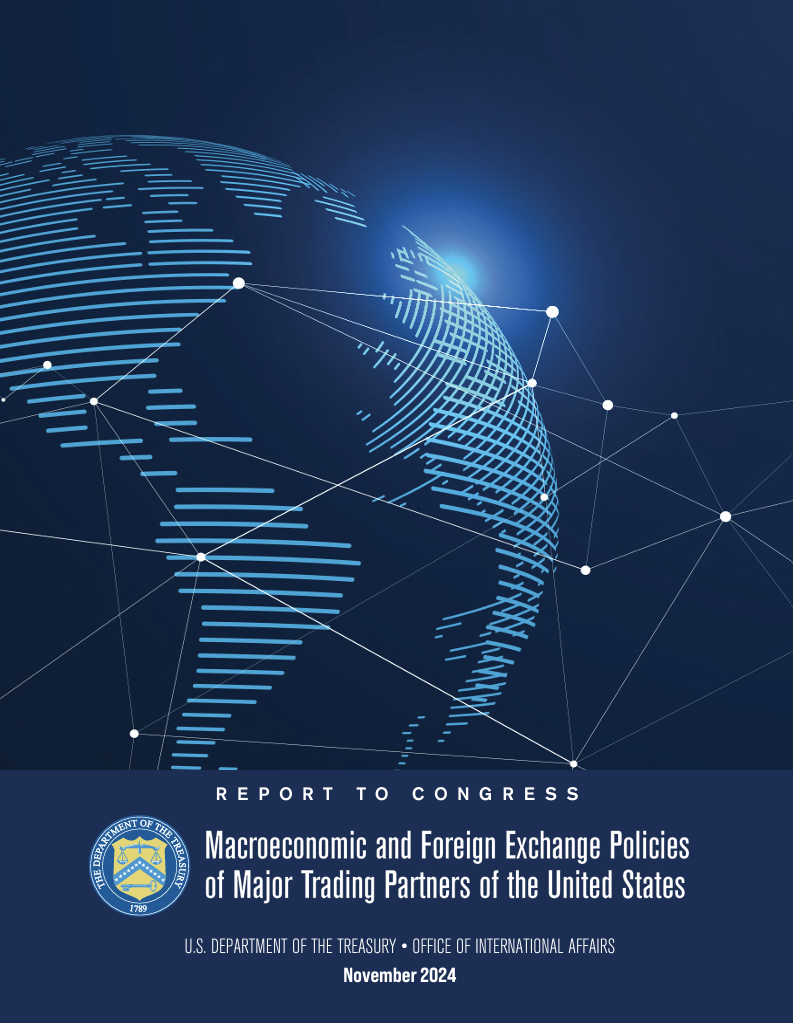
The U.S. Treasury’s Currency Monitoring List is part of its effort to ensure fair international trade practices and maintain economic stability. The list identifies countries that may manipulate their currencies to gain unfair trade advantages, such as making their exports cheaper or reducing the competitiveness of U.S. goods. The November 2024 report comprises China, Japan, Korea, Taiwan, Singapore, Vietnam, and Germany.
Criteria for Inclusion
The Treasury evaluates major trading partners under three main criteria. The first criterion is Bilateral Trade Surplus, which indicates that the country must have a trade surplus with the U.S. exceeding $15 billion over the past year.
Secondly, Current Account Surplus, where the global current account surplus must exceed 3% of its GDP. The final evaluation is Currency Intervention whereby the country’s central bank must have engaged in net purchases of foreign currency exceeding 2% of GDP over 12 months to weaken its own currency.

If a country meets at least two of these criteria, the U.S. places it on the monitoring list.
Actions and Implications
Placement on the list does not immediately result in penalties but signals that the U.S. is closely observing the country’s economic practices.
If a country engages in persistent and egregious currency manipulation, it may be labeled a currency manipulator, which could lead to negotiations, trade sanctions, or other economic actions.
To Conclude
Malaysia’s trade partnership with the U.S. and its removal from the currency monitoring list symbolize a milestone in the evolving bilateral relationship. With balanced trade practices and active engagement in regional economic initiatives, Malaysia not only solidifies its role as a reliable trading partner but also strengthens its global economic standing.
The positive trajectory of U.S.-Malaysia relations reflects mutual benefits in trade, investments, and collaborative economic policies.
Watch a video here:
@storyhubbs_ The US Treasury Department has removed Malaysia from its currency monitoring list, signaling a positive shift in the country’s economic practices. This is significant as being on the currency watchlist can strain trade relations and lead to penalties. In contrast, South Korea has been added to the list, raising concerns about transparency and trade imbalances, particularly with major economies such as China. Dive into the implications of these changes and what it means for global trade dynamics in our latest video. Don’t forget to like and share! #CurrencyWatchlist #USTreasury #MalaysiaEconomy #SouthKorea #TradeRelations #EconomicPolicy #GlobalTrade #CurrencyMonitoring #tradeimbalance
More of The Other Side:
Former Indian General says India Stands to Benefit from BRICS
Keep up with #TheOtherSide on Telegram and TikTok.
@the.other.side77
Share this content: